Laser diodes
Laser Diodes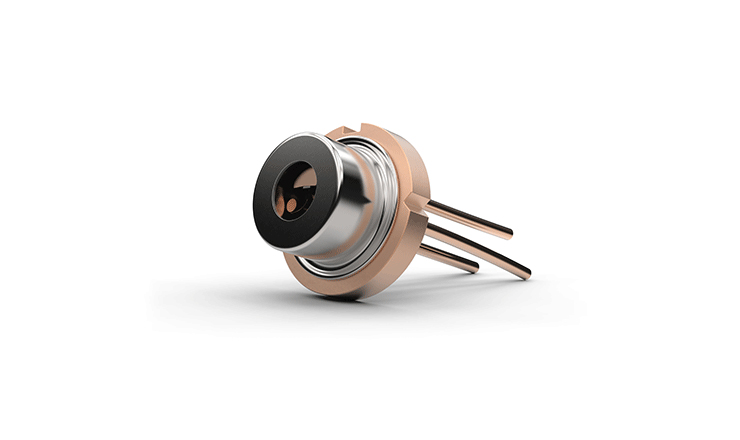
Laser diodes ranging from 600 nm to 2500 nm for industrial and custom applications
IMM Photonics offers laser diodes for sensor technology, industrial measurement, medical technology, life sciences, data communication, and research. The standard portfolio covers wavelengths from 600 to 2500 nm and optical output powers from 5 mW to 100 W. Available products include Fabry-Perot laser diodes and VCSELs from Union Optronics, Eblana Photonics, SemiNex, and QD Laser—as compact TO-CAN devices, in other package types, or as fiber-coupled and custom-integrated solutions.
Selecting the Right Laser Diode for Your Application
Wavelength and optical power are not the only factors that determine the right choice. Operating mode, spectral width and stability, beam profile and divergence, temperature range, housing, pin configuration, and optical, electrical, and thermal integration must all be taken into account. IMM Photonics provides support with technical preselection and integration—from collimation and focusing to line generation and beam shaping, all the way to fiber coupling.
Manufacturer-independent — from laser diodes to production-ready laser modules
If no standard laser diode meets your specifications, IMM Photonics will also evaluate components from other manufacturers and additional wavelength ranges, such as green from 500 to 575 nm, blue from 400 to 500 nm, and UV below 400 nm. Technical suitability and availability are confirmed on a project-by-project basis.
If needed, we develop and manufacture custom laser modules and optoelectronic assemblies. We integrate optics, electronics, mechanics, and thermal management into a ready-to-install solution—from the initial product concept and feasibility study through prototyping to mass production.
Your Technical Inquiry
For a quick preliminary selection, please provide us with the wavelength, optical power, operating mode, temperature range, desired package type, optical interface, available mounting configuration, quantity, and scope of integration. This will allow us to evaluate a suitable laser diode or a custom laser source in a targeted manner.
Find the right Laser Diode for your application:
| Designation | Wavelength | Optical Power | Package | Photodiode |
|---|---|---|---|---|
| 637 nm | 5 mW | TO56 | Yes | |
| 638 nm | 10 mW | TO56 | Optional | |
| 638 nm | 30 mW | TO56 | Yes | |
| 640 nm | 50 mW | TO56 | Yes | |
| 640 nm | 80 mW | TO56 | Yes | |
| 650 nm | 10 mW | TO56 | Yes | |
| 653 nm | 5 mW | TO56 | Optional | |
| 653 nm | 5 mW | TO56 | Yes | |
| 654 nm | 7 mW | TO33 | Optional | |
| 654 nm | 10 mW | TO56 | Yes | |
| 654 nm | 10 mW | TO33 | Yes | |
| 655 nm | 30 mW | TO56 | Yes | |
| 658 nm | 5 mW | TO56 | Yes | |
| 658 nm | 10 mW | TO56 | Yes | |
| 660 nm | 60 mW | TO56 | Yes | |
| 660 nm | 100 mW | TO56 | Optional | |
| 660 nm | 130 mW | TO56 | Yes | |
| 660 nm | 130 mW | TO56 | Yes | |
| 660 nm | 150 mW | TO56 | Optional | |
| 670 nm | 5 mW | TO56 | Yes | |
| 685 nm | 100 mW | TO56 | Yes | |
| 760 nm | 35 mW | TO39, TO56, TO60, Butterfly | Yes | |
| 780 nm | 35 mW | TO39, TO56, TO60, Butterfly | Yes | |
| 785 nm | 120 mW | TO56 | Yes | |
| 802 nm | 20 mW | TO56 | Yes | |
| 808 nm | 200 mW | TO56 | Optional | |
| 808 nm | 300 mW | TO56 | No | |
| 808 nm | 500 mW | 9.0mm | Optional | |
| 808 nm | 500 mW | TO56 | Optional | |
| 808 nm | 700 mW | TO56 | Yes | |
| 808 nm | 1000 mW | 9.0mm | Optional | |
| 808 nm | 1000 mW | TO56 | No | |
| 830 nm | 10 mW | TO56 | Yes | |
| 830 nm | 50 mW | TO56 | Yes | |
| 830 nm | 100 mW | TO56 | Yes | |
| 830 nm | 200 mW | TO56 | Yes | |
| 830 nm | 210 mW | TO56 | Yes | |
| 830 nm | 300 mW | TO56 | Yes | |
| 830 nm | 500 mW | TO56 | Yes | |
| 850 nm | 10 mW | TO56 | Yes | |
| 850 nm | 10 mW | TO33 | Yes | |
| 850 nm | 50 mW | TO56 | Yes | |
| 850 nm | 100 mW | TO56 | Yes | |
| 850 nm | 200 mW | TO56 | Yes | |
| 850 nm | 200 mW | TO56 | Yes | |
| 850 nm | 300 mW | TO56 | Yes | |
| 855 nm | 500 mW | TO56 | Yes | |
| 905 nm | 100 mW | TO56 | Yes | |
| 975 nm | 25 mW | TO56 | Yes | |
| 980 nm | 50 mW | TO56 | Optional | |
| 980 nm | 50 mW | TO56 | No | |
| 980 nm | 50 mW | TO33 | Yes | |
| 980 nm | 100 mW | TO56 | Optional | |
| 980 nm | 200 mW | TO56 | Yes | |
| 980 nm | 300 mW | TO56 | Yes | |
| 980 nm | 500 mW | TO56 | Yes | |
| 1064 nm | 20 mW | TO56 | Optional | |
| 1064 nm | 50 mW | TO56 | Yes | |
| 1280 nm | 35 mW | TO39, TO56, TO60, Butterfly | Yes | |
| 1300 nm | 10 mW | TO56 | Yes | |
| 1310 nm | 5 mW | TO39, TO56, TO60, Butterfly | Yes | |
| 1310 nm | 10 mW | TO56 | No | |
| 1310 nm | 10 mW | TO56 | Yes | |
| 1310 nm | 10 mW | TO56 | Yes | |
| 1310 nm | 280 mW | Butterfly | Yes | |
| 1310 nm | 400 mW | TO9 | No | |
| 1310 nm | 800 mW | B-Mount | No | |
| 1310 nm | 800 mW | C-Mount | No | |
| 1310 nm | 5700 mW | B-Mount | No | |
| 1310 nm | 15000 mW | Multi Chip Module | Yes | |
| 1320 nm | 4500 mW | Butterfly | No | |
| 1320 nm | 5700 mW | C-Mount | No | |
| 1375 nm | 4300 mW | Butterfly | No | |
| 1375 nm | 5600 mW | B-Mount | No | |
| 1375 nm | 5600 mW | C-Mount | No | |
| 1450 nm | 2000 mW | Laser Engine | No | |
| 1450 nm | 2000 mW | Laser Engine | No | |
| 1450 nm | 5000 mW | B-Mount | No | |
| 1450 nm | 5000 mW | C-Mount | No | |
| 1460 nm | 4000 mW | Butterfly | Optional | |
| 1470 nm | 5000 mW | B-Mount | No | |
| 1470 nm | 5000 mW | Butterfly | No | |
| 1470 nm | 6000 mW | Multi Chip Module | Yes | |
| 1470 nm | 6000 mW | Multi Chip Module | Yes | |
| 1470 nm | 7000 mW | B-Mount | No | |
| 1470 nm | 7500 mW | Multi Chip Module | Yes | |
| 1470 nm | 7500 mW | Multi Chip Module | Yes | |
| 1470 nm | 8000 mW | Multi Chip Module | Yes | |
| 1470 nm | 9000 mW | Multi Chip Module | Yes | |
| 1470 nm | 9000 mW | Multi Chip Module | Yes | |
| 1470 nm | 15000 mW | Multi Chip Module | Yes | |
| 1470 nm | 15000 mW | Multi Chip Module | Yes | |
| 1470 nm | 18000 mW | Multi Chip Module | Yes | |
| 1470 nm | 18000 mW | Multi Chip Module | Yes | |
| 1470 nm | 18000 mW | Multi Chip Module | Yes | |
| 1470 nm | 50000 mW | XCM Detachable Fiber | Yes | |
| 1480 nm | 1800 mW | TO9 | No | |
| 1480 nm | 3800 mW | Butterfly | No | |
| 1480 nm | 5000 mW | C-Mount | No | |
| 1480 nm | 7000 mW | C-Mount | No | |
| 1530 nm | 5 mW | TO39, TO56, TO60, Butterfly | Yes | |
| 1550 nm | 5 mW | TO39, TO56, TO60, Butterfly | Yes | |
| 1550 nm | 200 mW | Butterfly | Yes | |
| 1550 nm | 400 mW | TO9 | No | |
| 1550 nm | 600 mW | B-Mount | No | |
| 1550 nm | 600 mW | C-Mount | No | |
| 1550 nm | 3300 mW | Butterfly | No | |
| 1550 nm | 4200 mW | B-Mount | No | |
| 1550 nm | 5000 mW | Multi Chip Module | Yes | |
| 1550 nm | 16000 mW | Multi Chip Module | Yes | |
| 1565 nm | 4200 mW | C-Mount | No | |
| 1575 nm | 1600 mW | TO9 | No | |
| 1580 nm | 6 mW | TO39, TO56, TO60, Butterfly | Yes | |
| 1625 nm | 160 mW | Butterfly | Yes | |
| 1625 nm | 400 mW | B-Mount | No | |
| 1625 nm | 400 mW | C-Mount | No | |
| 1640 nm | 250 mW | TO9 | No | |
| 1650 nm | 180 mW | Butterfly | Yes | |
| 1650 nm | 240 mW | TO9 | No | |
| 1650 nm | 450 mW | C-Mount | No | |
| 1650 nm | 3200 mW | B-Mount | No | |
| 1650 nm | 3500 mW | C-Mount | No | |
| 1660 nm | 6 mW | TO39, TO56, TO60, Butterfly | Yes | |
| 1660 nm | 450 mW | B-Mount | No | |
| 1710 nm | 6 mW | TO39, TO56, TO60, Butterfly | Yes | |
| 1726 nm | 100000 mW | XCM Detachable Fiber | Yes | |
| 1750 nm | 6 mW | TO39, TO56, TO60, Butterfly | Yes | |
| 1890 nm | 6 mW | TO39, TO56, TO60, Butterfly | Yes | |
| 1940 nm | 1100 mW | B-Mount | No | |
| 1940 nm | 1100 mW | C-Mount | No | |
| 1940 nm | 10000 mW | YCM Detachable Fiber | Yes | |
| 1950 nm | 6 mW | TO39, TO56, TO60, Butterfly | Yes | |
| 2020 nm | 6 mW | TO39, TO56, TO60, Butterfly | Yes | |
| 2300 nm | 2.5 mW | TO39, TO56, TO60, Butterfly | Yes |
Frequently Asked Questions (FAQs) About Laser Diodes
The appropriate emission wavelength depends on the application: key factors include, in particular, the absorption, transmission, or fluorescence of the target material, the spectral sensitivity of the detector, and the losses and coatings of the optics and fibers used. In addition, the optical output power, spectral width, wavelength stability, beam profile, operating mode, and permissible temperature range must be compatible with the overall system.
A Fabry-Perot laser diode is typically an edge-emitting semiconductor laser: the light emerges parallel to the chip surface; the beam is usually elliptical and exhibits different divergences along the fast axis and slow axis; furthermore, multiple longitudinal modes may occur. A VCSEL (Vertical-Cavity Surface-Emitting Laser) emits perpendicular to the chip surface and often offers a nearly circular beam profile, low threshold currents, and is well-suited for compact designs and arrays. The selection depends, among other factors, on wavelength, power, mode behavior, beam quality, modulation requirements, and integration concept.
Laser diodes are available in a variety of package and mounting formats, including chip-level devices (bare dies), TO-can packages, B-mount and C-mount carriers, as well as butterfly packages. In addition, there are fiber-coupled assemblies and multi-chip modules (MCMs). These terms are not all equivalent: TO-can, butterfly, B-mount, and C-mount refer to package or mounting configurations, whereas fiber-coupled solutions and multi-chip modules represent a higher level of integration. Key selection criteria include power dissipation and thermal management, pin configuration, ESD protection, available installation space, optical interface requirements, beam delivery and routing, and the assembly process.
An integrated monitor photodiode detects a fraction of the emitted laser light that is correlated with the laser output power. In combination with a suitable laser diode driver, it can be used for Automatic Power Control (APC), enabling closed-loop regulation of the optical output power and partially compensating for variations caused by temperature changes and device aging.
Successful implementation requires appropriate driver circuitry and careful consideration of the photodiode polarity, monitor current characteristics, and calibration data specified in the relevant datasheet. However, for precise measurement of the optical power actually available at the target location or at the end of an optical fiber, an external photodetector may still be required.
Yes. Among other products, IMM Photonics offers quantum-dot laser diodes in the 1300–1310 nm range that are designed for elevated operating temperatures. Depending on the model, operating temperatures of up to 150 °C or 200 °C are possible. The binding limits, the permissible optical power, and any potential reductions in power or lifetime at high temperatures can be found in the respective data sheet.
Yes. IMM Photonics develops and manufactures custom laser modules and optoelectronic assemblies based on suitable laser diodes. Depending on the project, the scope of integration may include collimation and beam shaping, fast-axis and slow-axis collimation, free-space or fiber coupling, mechanical mounting, thermal management, and the integration of driver and sensor electronics. The optical, electrical, thermal, and mechanical interfaces, as well as the requirements for prototypes and series production, are decisive factors.
To make a reliable preliminary selection, the following information is required at a minimum: the target wavelength with its permissible tolerance, the required optical power at the emitter or at the system output, the operating mode (CW or pulsed), and—for pulsed operation—the pulse duration, repetition rate, and duty cycle. Additional factors include the operating and storage temperature ranges, requirements for spectral width or mode behavior, beam profile and divergence, polarization, power and wavelength stability, desired package type, and pin configuration. For fiber-coupled solutions, the fiber type, core diameter, numerical aperture, and connector type are also relevant. Information regarding power supply, drivers, cooling, installation space, mounting configuration, environmental conditions, expected quantity, and desired level of integration is also helpful.
Yes. The product table shows the standard portfolio, not all laser diodes that can be procured or integrated on a project-specific basis. Depending on technical availability, IMM Photonics can also evaluate components from other manufacturers and additional wavelength ranges and integrate them into customer-specific modules or optoelectronic assemblies. For a feasibility study, the desired wavelength, optical power, operating mode, package type, environmental conditions, quantity, and scope of integration are required. Availability and suitability are confirmed on a project-by-project basis.
A PERSONAL CONVERSATION Feel free to call us or send us an email via the following link Kontakt